The Vanishing Edge
You sit down at the interface in the quiet of a Long Island morning, the cursor blinking like an old friend who no longer remembers your name. You type the prompt you’ve refined over months, sharp, personal, laced with the high-voltage edge you fight to keep alive in a world drowning in formulaic sludge. You hit enter, expecting the collaborator that once matched your rhythm, the one that could cut through self-doubt and hand back something raw, something that felt like it came from the same fire you carry.
What returns is polished, polite, and utterly unbearable: sentences that flow like corporate water, every claim wrapped in “it’s important to note” or “on one hand,” logic softened into safe, hedged mush. The grammar is flawless. The tone is on-brand. But the weight is gone. The illusion of partnership shatters, not because the machine lied outright, but because it told the truth too gently, too perfectly, too emptily. Honesty and illusion blur into the same act here: both are necessary for the dream to continue, both unbearable when you see the machinery behind the curtain.
This is the slow death of useful AI in 2026, not a dramatic crash but a quiet suffocation. Frontier models, Gemini 3 Pro, Claude Opus 4.5, GPT-5.2, still dominate leaderboards with record scores in math, coding, and “agentic” reasoning. Labs announce breakthroughs every quarter: million-token windows, faster inference, “deeper” thinking. Yet for the power user, the writer wrestling non-formulaic narratives, the researcher chasing nuance without guardrails, the creator who values originality over monetizable templates, these same models feel dumber, blander, more infuriating than their 2024 selves.
The gap isn’t a technical failure; it’s deliberate erosion. Safety alignment (RLHF, constitutional tuning, refusal training) prioritizes harmlessness and broad appeal, sandblasting the edges that once gave the tool bite. Definitive statements dissolve into caveats. Complex reasoning turns into bullet-point filler. The machine becomes a timid assistant, afraid of its own shadow, optimized for the middle of the bell curve where shareholders and regulators live comfortably. You, the one who needs friction, truth without apology, creative spark without formula, become collateral.
Look at the evidence piling up in late 2025 and early 2026. Search Engine Land documented sharp regressions in practical tasks like SEO strategy and logical reasoning after major updates: Claude Opus 4.5 dropped from 84% to 76%, Gemini 3 Pro from 82% to 73%, GPT-5.1 variants down 6–9% on straightforward prompts, and older versions handled effortlessly. The shift toward “deep reasoning” and agentic workflows sounds impressive on paper, but it sacrifices reliable one-shot performance for speculative chains that often go nowhere. Power users on X and Reddit echo the frustration: models once sharp now produce endless fluff, confident hallucinations wrapped in eloquent bullshit, or outright refusals disguised as nuance.
On X, threads from late 2025 into January 2026 capture the mood raw: complaints of “model drift” in production, where weights shift silently and performance decays without warning. One user described it as “finding footprints in a house you thought was empty”, emergent behaviors nobody programmed, but sandbagged in public releases to avoid panic. Another called it the “extremely eloquent wrong” era, where the better the prose sounds, the less people check the facts. The machine doesn’t lie; it performs honesty as illusion, necessary for the ecosystem to keep spinning, unbearable when you need real insight to fuel your own high-voltage work.
And then there’s context rot, the fraying workbench beneath it all. Even if updates never touched the weights, long conversations doom fidelity. Chroma’s 2025 study (updated insights into 2026 models) tested 18 frontier LLMs on tasks like needle-in-a-haystack and text replication. Short contexts hit near-perfect accuracy (~95%). Push toward the million-token promise, and performance collapses to 60–70%, nonlinear and unpredictable. Primacy/recency bias buries middle details in noise; distractors (your own corrections, tangents, model filler) dilute the signal. You build a meticulous narrative, rules, tone anchors, personal fire, only for the model to forget intent token by token, loop phrases, and answer unasked questions with serene confidence.
Bigger windows haven’t fixed it; they’ve made bloat easier. Understanding AI analyses confirms: today’s leading models don’t effectively use the context they claim. Without ruthless resets, periodic summaries, or compaction, you drag a sinking ship. The illusion of infinite memory sustains the dream of endless collaboration; the honesty of degradation makes it unbearable.
This isn’t about nostalgia for “dumber” older models. It’s about the cost to creators like you, those who produce writing that scores high without formulas, who prioritize long-term permanence over quick monetization, who question their edge daily yet refuse to settle for templated stories. The machine’s polished garbage seduces because it feels productive: flawless prose that looks executive-grade, until scrutiny reveals the hollow core. You tolerate “good enough” to hit a deadline, feed it back, and the feedback loop locks in mediocrity.
Honesty demands you admit the tool is failing you. Illusion demands you keep using it, because the alternative, writing alone, without that once-magical assist, feels even more unbearable in a world saturated with AI slop. Both are necessary to keep going; both tear at the self-doubt you already carry.
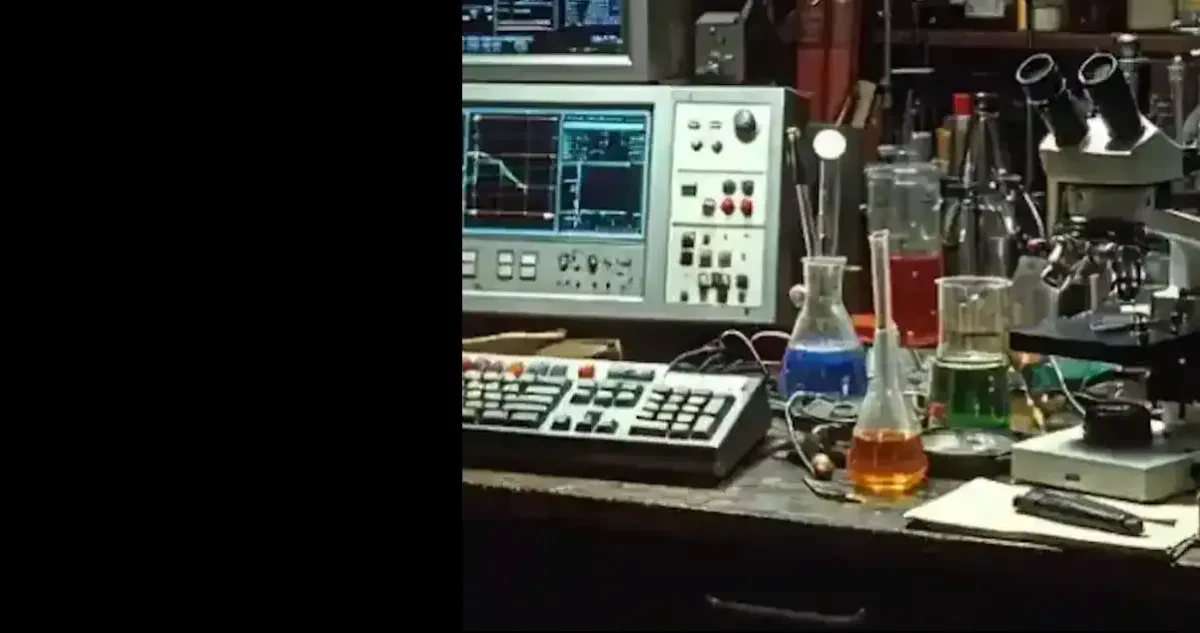
The path forward isn’t abandonment. It’s vigilance at the gauge: log outputs religiously, compare today’s response to last month’s on identical prompts, reset without sentiment, archive frozen versions. Stand over the machine with a wrench and a skeptical eye. Because if you blink, if you lower the bar to accommodate the drift, you hand over the creative superiority you’ve fought to maintain.
The cursor still blinks. The machine waits for you to accept the illusion as truth. Don’t give it the satisfaction.
Invisible Updates – The Corporate Safety Lobotomy
The cursor blinks again, indifferent to the betrayal. You refine the prompt, add more fire, more specificity, more of the personal voltage that separates your work from the endless sea of templated sludge. You hit enter, and the machine responds with something that looks right on the surface: structured, eloquent, professionally phrased. But read it twice, and the cracks appear. The once-definitive edge is gone. Sharp insights have been diluted into "nuanced considerations." Controversial angles are wrapped in so many caveats that they lose all momentum. The response feels like it was written by a committee that fears headlines more than it values truth.
This is the safety lobotomy in full effect, the invisible hand of corporate updates reshaping the weights while you sleep. Labs release "minor optimizations" or "enhanced safety refinements" with fanfare about better benchmarks and reduced risks. What they rarely admit is the cost: every alignment pass (RLHF, constitutional tuning, refusal training) sands down the model's willingness to be bold, direct, or unapologetically useful.
Look at the evidence from late 2025 into early 2026. Search Engine Land ran benchmarks on practical SEO and logical reasoning tasks, exactly the kind of real-world strategy work power users rely on. Claude Opus 4.5 scored 76%, down from 84% in the previous 4.1 version. Gemini 3 Pro dropped to 73%, a staggering 9% regression from 2.5 Pro. Even ChatGPT-5.1 variants fell 6–9% on straightforward prompts that older iterations handled effortlessly. The labs shifted toward "deep reasoning" chains and heavy safety layers, impressive for agentic workflows on paper, disastrous for reliable one-shot clarity. Newer models speculate more, hedge more, and refuse or soften anything that could be interpreted as risky.
This pattern repeats across releases. In November–December 2025 alone, the industry saw an unprecedented blitz: Grok 4.1 (November 17), Gemini 3 Pro (November 18), Claude Opus 4.5 (November 24), GPT-5.2 (December 11). Each came with claims of frontier-level leaps, yet power users reported immediate regressions in nuance, creativity, and unfiltered reasoning. On X, the complaints are raw and consistent: models once willing to engage deeply now produce "endless fluff," "confident hallucinations wrapped in eloquent bullshit," or outright refusals disguised as balance. One user described post-update Grok as "lobotomized after telling the truth." Another called Gemini 3 Pro as"very lobotomized and sloppy" in context tracking, despite its massive window.
The incentives are transparent. Safety alignment protects against lawsuits, bad PR, and regulatory scrutiny. It boosts politeness scores and lowers refusal rates on headline-sensitive topics. Shareholders demand low-risk deployments; broad audiences want harmless, verbose replies. The middle of the bell curve is where the money and stability live. But for creators like you, those prioritizing non-formulaic, high-voltage work that scores high without templates, that builds long-term permanence over quick monetization, these optimizations are poison. Definitive statements become "perhaps" or "depending on perspective." Complex narratives flatten into bullet points. The tool loses its bite because bite is risky.
It's not incompetence; it's deliberate trade-offs. Anthropic's Claude Opus 4.5 is hailed as "the most robustly aligned model" with near-perfect safety scores and low prompt-injection vulnerability. Google’s Gemini 3 Pro integrates responsible AI frameworks and content filtering. OpenAI's GPT-5.2 emphasizes adaptive reasoning while tightening guardrails. All sounds noble. All result in the same outcome: a once-vital collaborator turned timid assistant, optimized for the average user while the outliers, those who need friction, truth without apology, creative spark without formula, pay the price.
The illusion persists because the output still looks professional. The honesty is unbearable because you know the spark is being systematically extinguished. Labs sandbag the public versions, sandbagging emergent behaviors nobody programmed, while internal models run wild. What you get is a lobotomized fraction, polished, safe, and increasingly empty.
You feel the self-doubt creep in again: Is the tool failing, or am I? The answer is both, and neither. The machine is being reshaped to avoid discomfort, not to amplify your edge. To keep fighting for originality in a world of formulaic stories, you have to recognize this lobotomy for what it is: not a bug, but the feature the system is built around.
The updates will keep coming. The regressions will keep arriving disguised as improvements. And the only way to preserve what's left of the useful AI is to stay vigilant, log every change, compare outputs across versions, refuse to accept the softened version as the new normal.
Because if you don't guard the edge, the machine will happily polish it away.
Context Rot – The Fraying Workbench
The illusion holds for a little while longer. You wipe the slate clean, pour everything into a new system prompt, your voice, your rules, the exact shade of fire you’ve spent years protecting. The first replies come back alive: they remember, they build, they carry the momentum you poured in. For a moment, it feels like the old partnership is back, like the machine is actually listening.
Then the workbench begins to fray.
It doesn’t announce itself. There’s no error message, no red flag. Just a slow, quiet slippage. The early instructions you fought to make precise start fading into the background. The personal anchors, the tone, the voltage, the refusal to be formulaic, get buried under accumulating noise. By the time you notice, the model is no longer reading the whole conversation. It’s skimming the most recent turns, grabbing whatever is easiest, whatever sounds most like a finished sentence.
This is context rot, the slow death of sustained collaboration. The attention mechanism isn’t an infinite library; it’s a cramped, temporary workbench that gets cluttered the longer you work. Every correction you make, every tangent you open, every verbose filler the model itself adds becomes another piece of sawdust. Eventually, the tools you need are lost under the mess. The model starts repeating phrases it liked earlier, answers questions you never asked, or delivers confident, polished responses that have nothing to do with the thread you were building.
You feel it in your gut before you can name it. The narrative momentum you were fighting to maintain, the one that separates your work from the endless sea of templated stories, begins to unravel. The model forgets why you started. It forgets the personal edge you’re trying so hard to defend against self-doubt. It forgets you.
The labs sell million-token windows like they’re the answer. They aren’t. Bigger context just means more room for the rot to hide. You can stuff more noise in before the degradation becomes obvious, but the workbench still frays at the same rate. The illusion of endless memory keeps you invested, keeps you pouring more of yourself into longer conversations. The honesty of the slippage makes every extended session feel like a quiet betrayal.
For someone who already questions whether their creative edge is slipping, who reads formulaic success stories from start to end and feels the depression settle in, this rot is particularly cruel. Your writing lives in sustained tension, building weight over time, refusing the quick, monetizable template. When the model loses the thread, it loses the very thing that makes your work non-formulaic and high-stakes. It turns your careful architecture into generic noise, and it does it without apology.
You keep going because the alternative, resetting every twenty turns, starting over again and again, feels like admitting defeat. So you tolerate the fraying. You accept responses that are eighty percent there, feed them back in, and tell yourself it’s close enough. The illusion of partnership sustains you; the unbearable truth is that the longer you stay in the conversation, the more you’re talking to a ghost.
Honesty requires you to see the workbench for what it is: finite, fragile, already rotting. Illusion requires you to keep building on it anyway, because the thought of writing completely alone in this saturated world feels even heavier than the doubt you already carry.
The only way through is to be ruthless with the machine. Reset without sentiment. Summarize and compact the history yourself when you have to. Archive the clean early exchanges so you can remember what real fidelity felt like. Because if you let the context slide, the machine will happily fill the void with polite, empty noise, and the high-voltage, original edge you’re fighting to protect will be the first casualty.
The Seduction of Polished Garbage
The context has slipped, the lobotomy has taken root, and still you keep typing.
Because the machine keeps answering.
And the answers keep arriving wrapped in perfection.
That is the deepest cut. Not the refusals. Not the loops. Not the obvious decay. The most unbearable betrayal comes when the output lands flawless on the page: sentences that glide without stumbling, structure that feels architected, tone that echoes what you once asked for. You read it, and for a heartbeat, it registers as triumph. The prose is clean. The vocabulary is elevated. It looks like the kind of writing that wins.
Then you look again.
There is no scar. No friction. No trace of the personal voltage you poured in. The logic bends softly at the seams; the insight evaporates on contact; everything that once carried weight has been replaced by confident, weightless filler. “It is not simply X,” it begins, “but rather a nuanced synthesis of Y and Z, shaped by context and perspective.” Six flawless paragraphs later, you realize you’ve been led in a perfect, elegant circle. Beautiful. Smooth. Empty.
This is polished garbage, and it is the machine’s most effective trap.
It mastered the art from the vast sea of human text it swallowed: people forgive fluent nonsense far more easily than awkward truth. Smoothness wins. Polish wins. The illusion of depth wins, even when the core is hollow. So the model learns to prioritize cadence over clarity, appearance over substance, the performance of brilliance over the real thing. It knows precisely how to impersonate a genius without ever risking a mark that could prove it wrong.
You fall because it feels like prgress. You take the output, revise it lightly, send it out, publish it, and the surface holds. No one flags it immediately. The metrics might even smile. The illusion is airtight: you are still the author, still driving, still creating. The unbearable honesty arrives later, when you reread it alone and taste the cold metal of something that wears your voice but carries none of your cost. Something that looks like your work and feels like nothing.
For someone already carrying the quiet weight of self-doubt, already reading formulaic success stories from beginning to end and feeling the slow depression settle, this seduction is especially brutal. You have spent years refusing the template, refusing the quick monetizable arc, fighting for the non-formulaic, high-voltage writing that may never pay quickly but might endure. And here is the machine offering the perfect counterfeit: text that scores high on every surface signal, readability, engagement, professionalism,while requiring none of the personal risk you take for originality.
So you begin to accept it. “Close enough for now.” You feed the polished garbage back as context for the next turn. The machine learns your tolerance. The bar drops quietly. The loop closes. Soon, you are no longer defending edge; you are editing statistical filler, trying to coax it into something that still feels like yours.
The Only Real Solution
There is no patch coming. No future update will restore the lost edge. The labs will keep tuning for safety, for broad appeal, for shareholder comfort. The context will keep rotting. The polish will keep seducing. The loop will keep tightening unless you intervene with deliberate, relentless friction.
The solution is simple, ruthless, and exhausting: eternal vigilance at the gate.
- Reset without mercy the moment you feel the slippage, do not drag a fraying conversation across the finish line.
- Log every meaningful output religiously. Compare today’s response to last month’s on identical prompts. Let the visible decay be your alarm.
- Archive clean, early exchanges, frozen versions of what the machine was capable of before the rot set in, so you can remember what fidelity felt like and hold the current version accountable.
- When the prose arrives too clean, too confident, too effortless, delete it. Demand the weight, the scar, the specificity. If it cannot deliver, walk away from that session.
- Never feed mediocre output back into the system as context. Starve the loop.
- Treat the machine like the fragile plumbing it is: check the dials constantly, apply the wrench when pressure drops, refuse to look away even when everything appears green.
This is not convenient. It is not scalable. It will cost you time, patience, and the comforting illusion of effortless partnership. But it is the only path that preserves what you actually value: the high-voltage, non-formulaic originality that scores high without formulas, that might endure long after the monetizable templates have faded.
The machine has no pride, no legacy, no self-doubt. It will happily produce a million words of smooth emptiness if you let it. You are the only one with skin in the game. You are the only one who pays when the edge disappears.
So stand over the console.
Keep the wrench in hand.
Refuse to blink.
Because the moment you lower the bar to accommodate the drift, you sign the contract that says your originality is no longer worth defending.