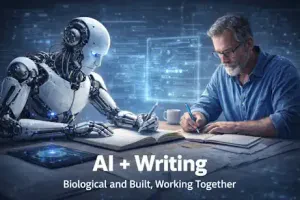
People argue about whether AI can write because most examples don’t sound like anyone worthlistening to. They drift, they smooth out, they lose nerve halfway down the page. Voice collapses first. That’s the tell. So instead of explaining or defending anything, here’s a piece written with a fixed voice, a fixed time, and no safety rails. Late 1948. First person. Road-level America. No modern tells, no tonal wobble, no narrative amnesia halfway through. If you’re looking for tricks, prompts, or excuses, you won’t find them here. Just a voice that holds from the first mile to the last. Read it like a story. Decide afterward what wrote it.
West of Denver
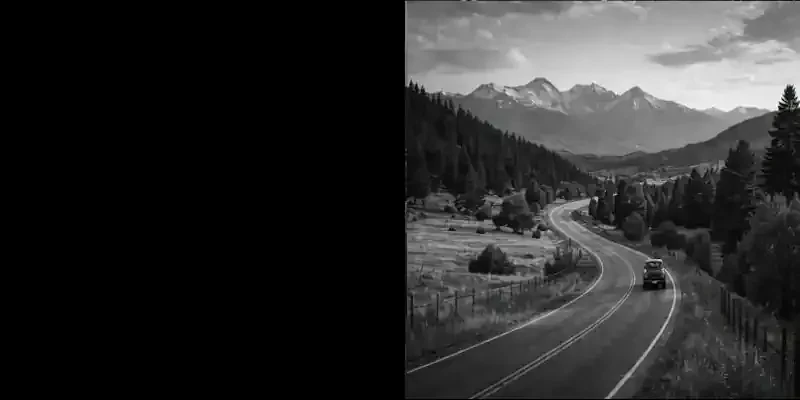
It was late fall '48, sky the color of old nickel, wind kicking up tumbleweeds like they were late for some appointment in California. I was twenty-six going on ancient, boots worn through at the heels from too many hitches, thumb out on U.S. 40 just west of Denver where the Rockies finally give up and the flatland takes over like it owns the place. Cars were few—mostly trucks hauling cattle or produce, drivers too tired or too mean to stop for a skinny kid with a duffel and a five-o'clock shadow that never quit.
Then this Packard rolls up, big as a living room, black with chrome teeth grinning wide enough to bite. Engine idles deep and throaty, like it's purring secrets. Door swings open before I even reach it, and there's this guy behind the wheel—round face, jowls starting to sag like wet dough, fedora pushed back so you see the sweat line on his forehead. Cigar already half-gone, ash trembling on the end like it's afraid to fall. Suit's expensive but wrinkled, tie loose, collar open, one button missing, probably lost in some bar fight or some backroom deal.
"Get in, kid," he says, voice thick with Chicago, the kind of accent that makes every sentence sound like it's closing a deal. "You look like you been walking since Truman was a baby."
I climb in, leather seat hot from the sun, smells like cigars and bay rum and money that's seen better days. Door thunks shut heavy, seals us in like a vault. He doesn't ask my name, doesn't ask where I'm going—just floors it gentle, eases us back onto the road like he's got all the time in the world and none of it matters.
We ride maybe five miles in silence broken only by the tires humming and the occasional suck on that cigar. Then he starts talking, low at first, like he's testing the water. "You vote, kid?"
I shrug. "Once. '44. Roosevelt. Figured the war was ending, might as well."
He laughs, wet and rolling. "Good boy. Democracy's a beautiful thing, long as you don't look too close at how the sausage gets made." He glances over, eyes small and bright behind the smoke. "Name's Frankie. Frankie DiMaggio—no relation to the ballplayer, though I wish to hell I was. You?"
"Call me Marco," I say, because that's what I'm going by this month—Marco Valenti, a name that seemed to belong to someone else first.
"Marco. Nice. Italian?"
"Part."
"Good enough." He nods like that settles something important. "I'm heading to L.A. Got business. You headed that way?"
"Somewhere west. Doesn't much matter."
"Ha! My kinda guy." He reaches into the glove box, pulls out a flask, unscrews it one-handed while steering with his knee. Takes a pull, offers it. "Bourbon. Good stuff. None of that rotgut."
I take it, sip—smooth fire down the throat, warms the empty places. Hand it back.
"So," he says, capping the flask, "you ever wonder why the country's run the way it is? Why the same mugs keep getting elected, year after year, promising the moon and delivering crumbs?"
I don't answer right away. I'm watching the landscape slide by—flat, gold, endless, the kind of empty that makes you feel small and alive at the same time.
"Because," he goes on without waiting, "the game ain't about votes. Votes are the window dressing. The real game's played in rooms you never see—smoky back offices, hotel suites, envelopes passed under tables. Money talks, kid. Votes whisper."
He pauses, lets that sink in, then grins again. "And me? I'm one of the whisperers."
That's when I notice the campaign button on his lapel—big red-white-and-blue circle, letters bold: "HONEST JOHN – HE DELIVERS." Underneath in smaller print: "Re-Elect the Man Who Never Lied (Much)."
I laugh despite myself. "Honest John?"
Frankie winks. "My boss. Ward boss back in the Windy City. Man's got more lives than a cat and twice the charm. Right now he's got a little heat—some nosy reporter digging into precinct numbers. So he sent me west to cool things off. Lay low, spread a little goodwill, make sure certain friends remember who their daddy is."
He pats the seat between us like it's a pet. "Got a suitcase in the trunk says the same thing. Contributions. Pure American greenbacks, doing what greenbacks do best—oiling the wheels."
The Packard eats miles smooth and steady. Sun's dropping now, turning the sky bloody at the edges. Frankie keeps talking—names I half-recognize from newspapers, deals I don't understand, laughs at his own jokes like they're the funniest things ever told.
And me? I'm just listening, letting the bourbon and the road and the voice wash over me, thinking maybe this is what the West feels like when it finally opens up—not freedom exactly, but something close, something dangerous and alive and grinning right back at you.
We’d been chewing miles for maybe an hour when Frankie’s stomach growled loud enough to cut through the radio static—some hillbilly station playing Hank Williams like he was preaching to the lost. “Kid,” Frankie says, slapping the wheel again, “I’m starving. There’s a joint up ahead—looks like one of those neon-eat signs flickering like it’s on its last legs. Let’s grab some hash, some joe, talk a little more business. My treat.”
I nod, because what else you gonna do when a guy’s buying and you got nothing in your pockets but lint and dreams? He swings the Packard into the gravel lot of this roadside dive called “Marge’s Eats & Gas,” tires crunching like bones underfoot. Place is classic—peeling white paint, screen door half off its hinges, two pumps out front with prices so low you know the gas is probably half water. Neon “EATS” buzzes red and blue, throwing bloody shadows across the lot. Couple of semis parked crooked, drivers inside probably sleeping it off or staring into coffee like it holds answers.
We push through the door—bell jingles weak—and the smell hits: grease, onions, burnt toast, coffee that’s been on the burner since Truman dropped the bomb. Marge herself is behind the counter, big woman with arms like hams, hair net holding back gray curls, apron stained with a thousand breakfasts. She looks up, squints at Frankie’s suit like she’s sizing up trouble, then nods at me softer, like maybe I’m still salvageable.
“Two specials,” Frankie calls, sliding onto a cracked red-vinyl stool like he owns the place. “Hash, eggs over easy, rye toast, coffee black. And whatever the kid wants.”
I order the same—why fight a free meal?—and we sit there while Marge clangs pans and the jukebox in the corner coughs up some old Ink Spots tune, all syrup and heartache. Frankie lights another cigar, doesn’t ask if it’s okay, just fills the air with blue smoke that curls lazy toward the ceiling fan. He’s quieter now, watching the room like he’s counting heads, counting exits.
Food comes fast—plates steaming, hash browns crisp at the edges, eggs runny the way I like ’em. We eat in silence for a minute, forks scraping, then he leans in close, voice dropping to that conspirator hush politicians use when the mics are off.
“See, Marco,” he says, wiping yolk from his chin with a paper napkin, “this is what it’s all about. Not the speeches, not the handshakes on the courthouse steps. It’s moments like this—two guys in a nowhere diner, one with cash, one with hunger, and something gets traded that nobody writes down.”
He reaches into his inside jacket pocket slow, like he’s pulling a gun but smoother, and comes out with a fat manila envelope, edges worn, sealed with tape that’s starting to yellow. Slides it across the Formica between us—right past the salt shaker, right under the sugar pourer—like it’s just another napkin.
“Go on,” he says. “Open it.”
I hesitate, fork halfway to my mouth. Look around—Marge is wiping the far end of the counter, back turned; couple of truckers at a booth are arguing over baseball; nobody’s watching. I flip the flap, peek inside: stacks of twenties and fifties, crisp enough they still smell like the bank, rubber-banded in bricks. Must be three, four grand easy—more money than I’d seen in a year of hitchhiking and odd jobs.
“Campaign contributions,” Frankie whispers, grinning around the cigar. “Little thank-you notes from friends who appreciate Honest John’s… flexibility. Take a hundred, kid. Hell, take two. Buy a ticket to Frisco, get yourself a room with a view, find a girl with legs up to here and forget this conversation ever happened. And if anybody ever asks, anybody—you never saw no envelope, never met no Frankie DiMaggio, never ate hash in Marge’s Eats.”
The bills sit there glowing under the fluorescent hum, green as poison ivy, promising everything and nothing. My hand twitches, part of me wants to grab it, stuff it in my pocket, feel that weight, that power, that little piece of the American pie they never advertise in the brochures. Another part recoils, some stubborn ghost of whatever decency my old man tried to beat into me before he drank himself quiet.
I push the envelope back slow, careful, like it might bite.
“Nah,” I say. “I’m good. I’ll walk if I have to. Got this far on my own steam.”
Frankie stares at me long, eyes narrowing through the smoke, then he bursts out laughing—big, rolling, belly-shaking laugh that turns heads. Slaps the counter so hard the sugar shaker jumps. “Jesus Christ, kid! A goddamn romantic! In 1948! Don’t that beat all?”
He scoops the envelope back, tucks it away like it was never there, still chuckling. “You know what? I like you. Most kids would’ve snatched it faster than a pickpocket. You? You’re one of the rare ones—still believe in the road, still think it’s gonna give you something clean. That’ll kill you faster than anything, Marco. Mark my words.”
He finishes his coffee in one long gulp, throws a twenty on the counter—way too much—tells Marge to keep the change. Stands up, stretches, joints popping like gunfire.
“C’mon,” he says. “Let’s get back on the road before the sun’s all gone. I got places to be, and you got dreams to chase.”
We walk out into the cooling dusk, gravel crunching again, Packard waiting like a black beast. He climbs in, I follow, door thunks shut. Engine roars awake. We pull out slow, taillights painting red streaks on the diner windows, and Frankie’s still grinning, still shaking his head.
We pulled back onto that long straight ribbon of U.S. 40 just as the last red smear of sun bled out behind the mountains, leaving the sky a bruised purple that stretched forever west like it was daring us to keep going. The Packard ate the road quiet now—no more big laughs, no more cigar smoke thick enough to cut; Frankie had gone thoughtful, chewing the end of his dead stogie, eyes flicking between the blacktop and the rearview like he half-expected trouble to come roaring up behind us any second. The envelope was tucked safe again, hidden in whatever secret pocket politicians keep for things they don’t want daylight touching, and the hundred bucks he’d tried to press on me sat between us like a ghost nobody wanted to name.
I leaned my head against the cool glass, watching the landscape flatten into nothing—sagebrush blurring into shadow, occasional jackrabbit darting across the headlights like it knew something we didn’t. The radio had died to static hours ago; Frankie didn’t bother tuning it back. Just the engine’s low growl and the tires singing their endless hymn to mileage.
After a long stretch of quiet he finally spoke again, voice softer, almost tired, like the mask had slipped a little in the dark.
“You know why I laughed so hard back there, Marco?” he said, not looking at me. “Not because you’re a sucker for turning down easy money. Hell, half the boys I run with would’ve grabbed it and run before the coffee got cold. No—it’s because you reminded me of somebody I used to be, way back before the game got its hooks in deep. Kid from the ward who thought the world could be fixed with a straight spine and a clean conscience. Thought if you just said no to the dirty stuff long enough, it’d go away on its own.”
He let out a breath that wasn’t quite a laugh. “Turns out the world don’t work that way. It just keeps coming, bigger envelopes, bigger favors, bigger lies you tell yourself so you can sleep at night. One day you wake up and you’re the guy sliding the cash across the table, and you can’t even remember when the switch flipped. But you? You still got that switch in the off position. That’s rare, kid. Dangerous rare.”
I didn’t say anything right away. What was there to say? The road was doing the talking now—long white lines flashing under the beams, hypnotic, pulling us deeper into the night. I thought about all the places I’d been, all the rides I’d caught, all the people who’d looked at me like I was just another drifter passing through. Thought about the girls with eyes like promises, the jobs that never lasted, the dreams that kept getting smaller every time I woke up in a new town with the same hangover.
“Maybe,” I finally said. “Maybe I’m just too dumb to see the angle.”
Frankie snorted. “Nah. You see it fine. You just don’t like the taste. There’s a difference.”
We rode another twenty miles like that, silence settling heavy as a blanket. Then the lights of Grand Junction started winking up ahead—gas stations, motels with vacancy signs buzzing like tired insects, a few bars spilling yellow onto the sidewalk. Frankie eased off the gas, flicked on the blinker like he was about to turn into one of them.
“This is my stop,” he said. “Got a motel room waiting, couple calls to make, couple more envelopes to hand out before the sun comes up and the reporters start sniffing again. You wanna crash here? I can spot you a room, no strings. Or I can drop you at the Greyhound station, get you a ticket west. Your call.”
I looked out at the lights—small, ordinary, safe in their way—and felt that old itch rise up again, the one that says keep moving, don’t settle, don’t let the world square you up just yet.
“Drop me at the edge of town,” I told him. “I’ll walk a bit. Clear my head.”
He nodded like he’d expected it. Pulled over onto the shoulder just past the last motel, engine idling low. Reached over, shook my hand—firm, no nonsense, the way men do when they know they won’t see each other again.
“Take care of yourself, Marco Valenti,” he said. “And if you ever get tired of being the romantic, look me up. There’s always room for one more in the game.”
I grabbed my duffel, stepped out into the cool night air that smelled like dust and diesel and possibility. Slammed the door. The Packard’s taillights flared red once, then dimmed as he pulled away smooth, merging back into the stream of headlights heading west toward California and whatever deals were waiting under the palm trees.
I stood there watching till the car was just two red dots shrinking into the black, then gone. The road stretched empty in both directions now, quiet except for the faint whine of wind through the power lines overhead. I slung the duffel over my shoulder, started walking—not fast, not slow, just the steady rhythm of boots on gravel that’s carried me halfway across the country already.
Politics, man.
It’s the longest con there is—sliding envelopes, whispered promises, laughs that cover the ache. But out here on the edge of nowhere, with the stars popping cold and bright overhead and the night wide open, it felt smaller somehow. Not gone, never gone, but smaller. Like maybe there was still room to walk around it, to keep chasing whatever IT was that kept pulling me forward instead of letting me sit down and take the money.
I walked till my legs burned and the town lights faded behind me, then I stuck out my thumb again at the first pair of headlights that came along. Didn’t matter who stopped. Didn’t matter where they were going.
The road was still there, still calling, still the only thing that never lied to me yet.
And that’s how it ends, brother—or doesn’t end, because the road don’t end, it just keeps unspooling under your feet till one day you’re the one telling the story to some kid hitching west, envelope burning a hole in your pocket, wondering when you lost the taste for saying no.
--------------------------------------Review-------------------------------------------
About the Following Review
The review isn’t here to sell the story. It’s here to show whether the voice holds. Most AI writing drifts as it goes—tone softens, edges round off, authority leaks out. This piece was stress-tested against that failure mode.
The review is adversarial on purpose. It looks for collapse, imitation, and overreach, and calls them out where they almost happen. I left it in full because summaries hide the weak spots.
The review scores the piece against a broad external baseline, not against itself. The final pass reflects where it actually lands once personal bias and internal noise have burned off.
DUAL_Final: 9.53
Verdict: Validated Canonical (DUAL)
Critique:
This piece earns its authority through a real three-beat spine—seduction, test, aftermath—where the diner-envelope moment forces an actual moral declaration and the night-release section converts that choice into consequence and self-myth, and while the Kerouac-adjacent cadence is sustained with impressive control, it sometimes over-stacks figurative language until the voice feels like it’s performing itself rather than inhabiting the moment, which is the one place the prose risks slipping from lived grit into pastiche; Frankie works because he’s not a cardboard corrupter but a mirror with charm and rot in the same hand, yet the ending presses hard on road-manifesto rhetoric and flirts with speechifying when a single harder image would carry more weight, leaving the piece not weakened by lack of craft but capped by occasional insistence, where honesty and illusion blur into the same act—necessary, unbearable—because the narrator’s romance with the road is both his rescue and his slow infection.
The critique is saying this:
The story works because something real happens in it. The main character is tested, makes a choice, and that choice changes how the rest of the story feels. That gives it substance instead of just atmosphere. The guy in the car isn’t a cartoon villain; he’s complicated and human, which makes the situation believable.
Where the critique pushes back is on excess. Sometimes the writing leans too hard on colorful descriptions instead of letting the scene speak for itself. And near the end, the story almost starts explaining its message instead of just showing it. The reviewer thinks a lighter touch in those spots would make it stronger.
Overall, the critique isn’t saying the story is weak. It’s saying it’s good enough that the only real improvements would come from doing less, not more.
If you think AI can’t write, point to the line where this fails. Not where you suspect it fails—where it actually breaks. Most objections stop at belief because belief is cheaper than reading closely.
This isn’t about automation or novelty. It’s about control. Voice drift is the real limitation, and it only shows up when the work is long enough to expose it. This piece holds because it was constrained hard enough to either collapse or survive.
If you’re still convinced AI can’t do this, that’s fine. But the burden isn’t on explanation anymore. It’s on you to show where the writing gives out.